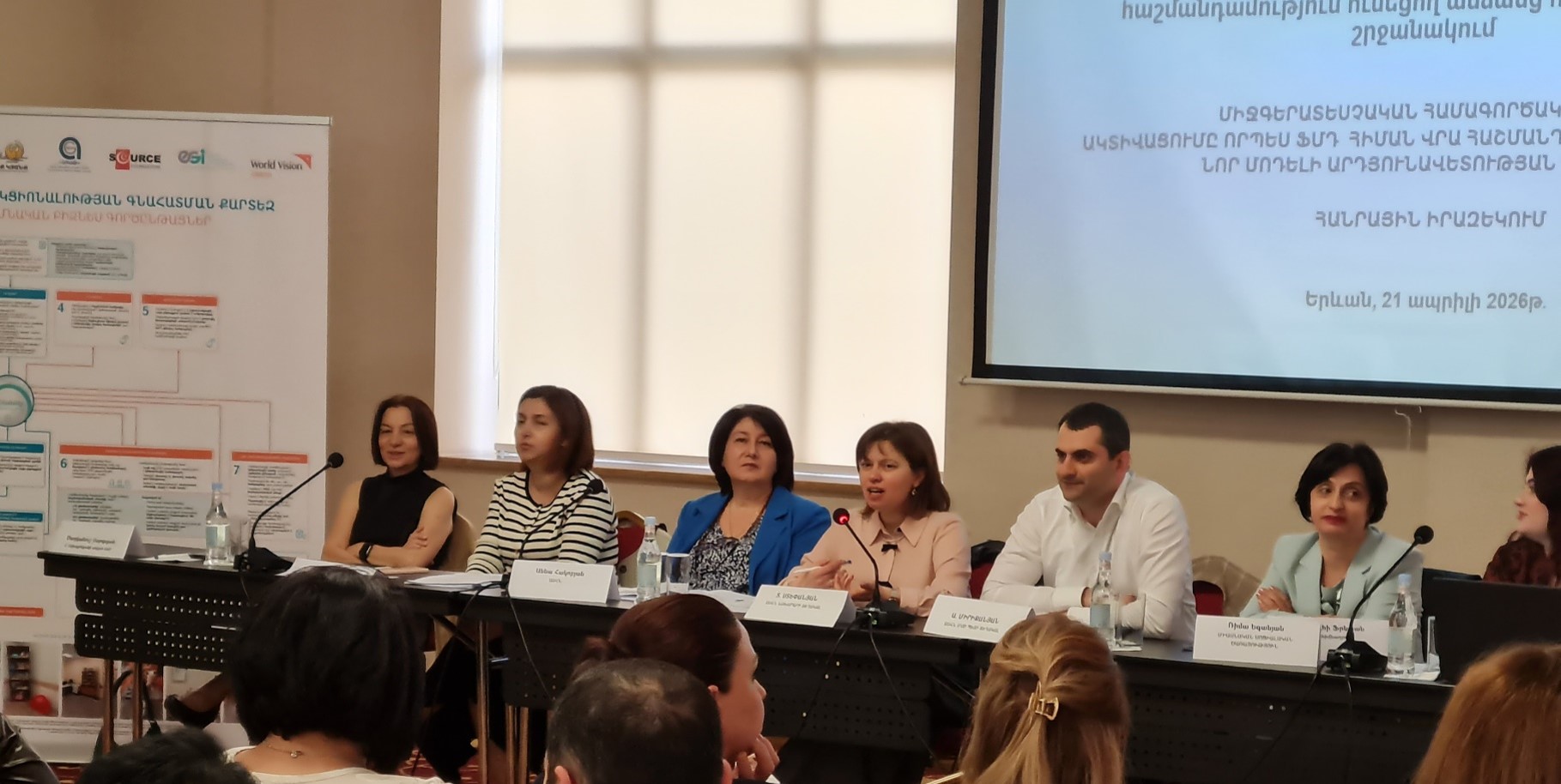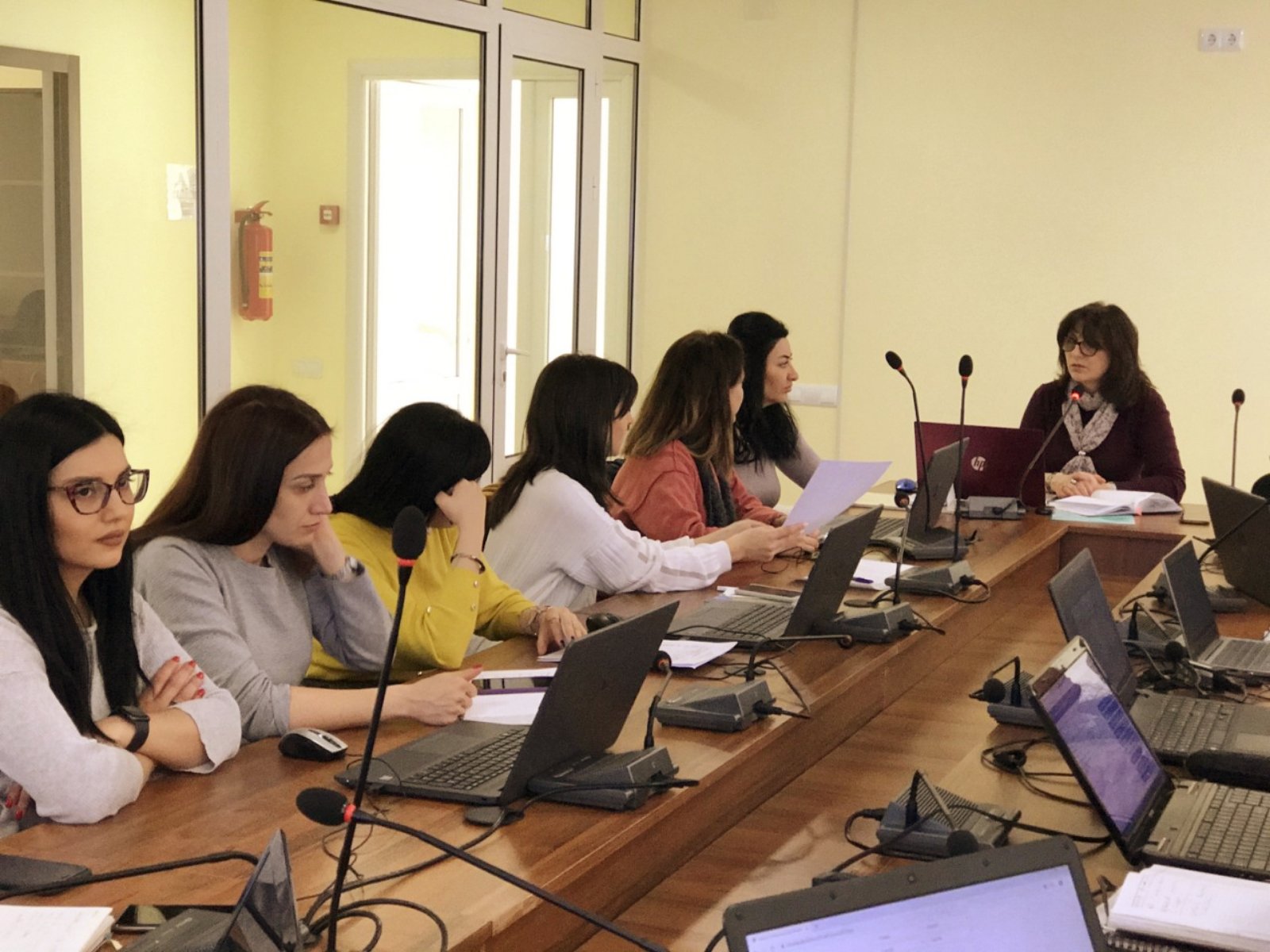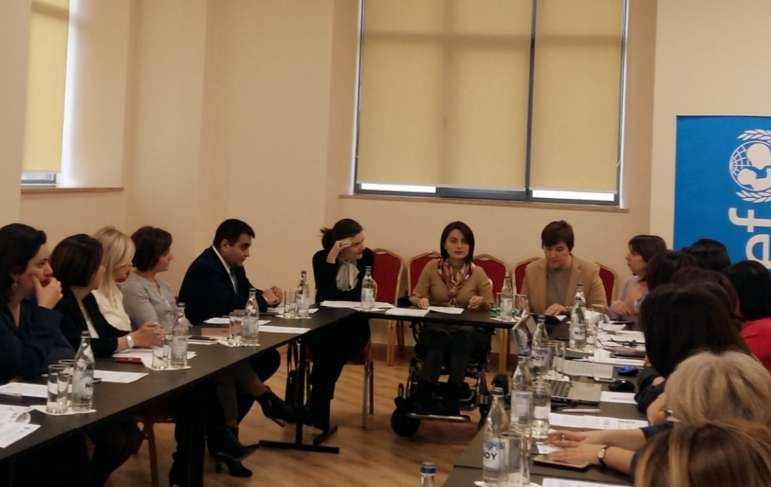
A workshop on information exchange among key agencies involved in the introduction of the functional assessment system and coordination of services provisoon among the agencies introducing the system was held at Ani Grand Hotel on November 25-26, 2019.
The meeting was convened within the scope of UNICEF Armenia-funded “Harmonization of Disability Measurement Tools and Methodology, and Developing Electronic Data Exchange and Cross-Sectoral Data Management” project.
The main goal of the meeting was to discuss issues related to child and adult functional assessment and coordination of the provided services between the RA Ministry of Labor and Social Affairs, RA Ministry of Health and RA Ministry of Education, Science, Culture and Sport, and reach an agreement on:
– information exchange procedures,
– content, format, dates and needed resources for the information to be exchanged,
– assign responsible persons for the information exchange.
The brief summary of the workshop
During the 2-day discussion, the representatives of the RA Ministry of Labor and Social Affairs, the RA Ministry of Education, Science, Culture and Sport and Ministry of Health spoke on the key functions and further developments of e-disability information system and Special Educational Needs (SEN) information systems.
The meeting also focused on the data exchange options and issues to be addressed, as well as needed legislative changes and cooperation frameworks.
The participants of the meeting noted that EKENG had facilitated the process of cross-sectoral data exchange.
As a result of the discussions between RA Ministry of Labor and Social Affairs and RA Ministry of Education, Science, Culture and Sport, it was recorded:
The issues to be addressed:
– specify and match the applied concepts and terms for use of consistent terminology throughout all the systems,
– validate the assessment tools and methodology,
– revise Special Educational Needs (SEN) assessment tools and develop a functional profile form,
– support National Pedagogical-Psychological Center for specification of e-code assessment,
– revise and validate the tools for assessing child activity and participation d-codes,
– ensure accessibility of a child’s medical documents or diagnosis and information on disability for the educational system at the same time keeping it confidential to follow ethical norms and data protection rules.
Legal Acts
– to amend the RA Law on Education, bringing it in line with the results of SEN assessment protocols; introduce the notion of functional limitations instead of disorders in functions,
– specify the funding allocation per child based on the severity level of the functional limitation and services needed; develop a new regulation as appropriate,
– clarify the validation dates of assessment results by codes and define a need for new legal act,
– consider not only vertical but also horizontal decision-making on cross-sectoral platforms.
Information exchange
The educational system needs:
– information on the level of child’s functional limitations, date of the assessment and the day of the revision for accurate development of his or her Individual Education Plan (IEP),
– information on the measures to be applied within the child’s Individual Service Plan, assistive devices and provided services (transfer the list of the needs to the agency providing the service and ensure feedback).
The Functional Assessment System needs:
– data on the educational institution of the children aged 3-18 who have passed SEN assessment, the start and end date of the assessment, conclusion, evaluation of the implementing team, IEP, functional assessment description and the services provided in the reviewed period,
– data on the educational institution for those aged 18-25, all the necessary conditions for organization of the learning process – needs and availability (Braille books, adjusted environment, learning process etc.).
As a result of the discussions, it was decided:
– to provide the list of the tools based on the Cyprus experience to the participants,
– develop the detailed list of the data needed for each sector and present to the participants, later to organize an additional discussion to define the options of the piloted data exchange, set the dates, assign the responsible persons and optimize the processes.
As a result of the discussions between the RA Ministry of Labor and Social Affairs and RA Ministry of Health, it was recorded:
– e-health information system made excellent progress; ICD-10, ICD-10 PCS and LOINC coding systems are being introduced. A 3-year development program has been worked out for making informaton on healthcare fully online. Each citizen will have his or her account and access it via an ID,
– e-health is ready to exchange information if the needed information is specified and if the options and availability dates are discussed with relevant specialists.
Information Exchange
The Functional Assessment System needs:
– the whole information available on children aged 0-2 from e-health information system;
– a referrals for disability assessment including individual medical reports, results of the objective medical examination, neurological condition, motor-skeletal system, results of lab analyses, the principal disease (based on the ICD codes, the type and degree of functional disorders), accompanying diseases (based on ICD codes, the type and degree of functional disorders),
– information on the provided services as part of the healthcare measures within Individual Service Plan
The healthcare system needs:
– information on the level of individual functional limitations, date of the limitation defined, day of the re-examination,
– information on the person’s temporary incapability for work.
As a result of the discussions, it was agreed:
– to develop a detailed list of the data needed for each sector and present it to the participants; to organize an additional discussion to define how to exchange the presented data, set the dates, assign those responsible and optimize the processes,
– the National Health Institute will allow the RA Ministry of Labor and Social Affairs to get acquainted with the test version of e-health,
– organize meeting-discussions at the National Health Institute with the working group on ICD-ICF cross-change to define the opportunities and set dates of more productive work in future.